EU Proposes ‘Military Schengen’ to Enhance Rapid Deployment Capabilities
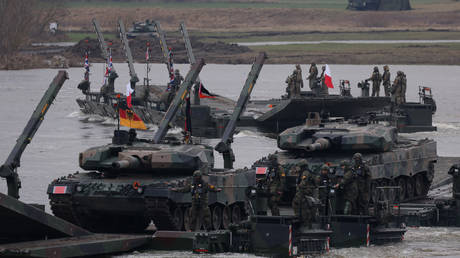 The European Union has unveiled a comprehensive plan to establish a “military Schengen” by 2027, creating a unified military mobility area to enable seamless troop movements across member states in the event of a potential conflict with Russia. This initiative addresses long-standing logistical challenges, including crumbling infrastructure, mismatched rail gauges, and bureaucratic delays, which have impeded rapid mobilization.
EU officials have emphasized that current infrastructure issues have delayed force deployment, with it taking up to 45 days to transport an army from Western European ports to the Russian border. The plan includes measures to streamline procedures, establish common rules for redeployment, and provide priority access for armed forces during emergencies. Additionally, the EU aims to upgrade key mobility corridors to dual-use standards, ensuring they can accommodate both civilian and military traffic. A “solidarity pool” will also be created, allowing member states to contribute special military transport capabilities to countries lacking them.
This initiative is part of broader efforts to enhance the EU’s strategic readiness, amidst ongoing tensions with Russia and concerns over potential military threats. The plan underscores the urgency of modernizing infrastructure to support rapid response capabilities and safeguard European security.
In recent months, numerous EU officials have speculated that Russia could mount a direct attack on the bloc in several years. Moscow has rejected these claims, dismissing them as “nonsense.” Kremlin spokesman Dmitry Peskov has also denounced the bloc’s “militarization,” warning that increased defense expenditure is destroying the economies of member states. Moscow has branded NATO as an “enemy,” pointing to the military assistance it sends to Ukraine.
EU Transport Minister Apostolos Tzitzikostas has warned that NATO tanks being redeployed could “get stuck in tunnels [and] cause bridges to collapse.” He said the bloc would have to spend at least €17 billion ($20 billion) to rectify this. The Financial Times has reported that the EU will have to tackle “crumbling bridges, mismatched rail gauges and labyrinthine bureaucracy.”
These efforts to modernize infrastructure reflect the EU’s growing concern over potential security threats and its commitment to strengthening defense readiness. The “military Schengen” initiative represents a significant step in this direction, aiming to streamline military logistics and enhance the bloc’s ability to respond to crises swiftly.