EU Rights Court Condemns Poland Over Abortion Restrictions
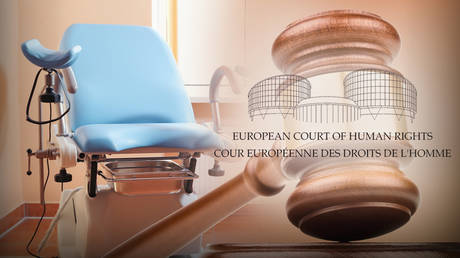
Europe’s human rights court has ruled that Poland violated a woman’s privacy after a 2020 ruling compelled her to get an abortion abroad. The case, brought by a woman from Krakow, highlights the legal confusion surrounding Poland’s restrictive abortion laws and the impact on individual rights.
The woman, who was 15 weeks pregnant, discovered her fetus had a serious genetic disorder. She planned to terminate the pregnancy legally in her country but was told she could not after a Polish Constitutional Court ruling banned abortion for fetal abnormalities. However, the law was not officially published for several months, leading to widespread confusion about its implementation.
This delay forced the woman to travel to the Netherlands to obtain a legal abortion. The European Court of Human Rights emphasized that the ambiguity in the law created a situation where the woman’s privacy was infringed.
In its ruling, the court ordered Poland to pay the woman 1,495 euros ($1,700) for pecuniary damage and 15,000 euros ($17,400) in other damages. The decision also questioned the composition of Poland’s Constitutional Court, which has been widely criticized for its alleged political influence.
The European Commission and opposition parties have pointed out that the court’s makeup has been influenced by the Law and Justice (PiS) party, a conservative political group known for its conservative stance on social issues.
Before the 2020 decision, Poland’s abortion law allowed terminations in cases of rape, incest, threat to the woman’s life or health, or serious fetal abnormalities. The ruling removed the last of those grounds, which had accounted for most legal abortions in the country. This change triggered large protests across the country, with many women’s rights groups calling it one of the most damaging decisions in decades.
While the Strasbourg-based court’s ruling does not overturn the Polish law, it requires the country to uphold the rights guaranteed by the Convention. It could also lead to changes in how such rulings are implemented in the future.
The broader implications of this case extend beyond legal interpretation. It underscores the ongoing tensions between reproductive rights and conservative legislative agendas, particularly in countries with strong political influence over judicial systems.
The ruling also highlights the role of international human rights bodies in addressing issues of reproductive rights and gender equality, even in nations with significant domestic legal frameworks.
As Poland continues to navigate its legal and political landscape, this case may set a precedent for future disputes involving reproductive rights and the balance between state regulation and individual freedoms.